What is
Sparrow Loyalty Management For Sport Club?
Goals
The solution enable to support multiple channels for football clubs to interact with their fans and for fans to follow their favorite players, club news, collect data on ticket sales and attendance and optimize all processes based on metrics gathered from analytics.
Solution Advantage
Blockchain-based engagement and loyalty platform with analytics tools for tracking fan behavior and extracting value from the activities in which fans participate in via native mobile apps.
- Hyperledger Fabric-based platform and blockchain-enabled loyalty program
- Mobile app for fans to follow and actively engage with their favorite clubs
- Full set of analytics tools for football club managers to track sales and fan behavior
- API for third-party integration to enable discounts and special offers
- A decentralized ecosystem that seamlessly integrates into the client’s internal processes and systems, such as:-
- CRM and data warehouses
- Existing fan membership portals
- Ticket distribution services
- Social networks and media resources
- Stadium access control systems
The platform allows loyalty systems to communicate with the blockchain and share data that is permanently recorded and stored. Blockchain-enabled token accounting preserves the liquidity of in-app tokens and ensures the security of each peer-to-peer token transaction.
Our web-based management and analytics dashboard for club administration presents in-depth fan behavioral data collection. It provides actionable insights into the fans’ attendance, preferences, spending behavior, geography, and more.
Football club owners get the opportunity to increase fan engagement, provide bespoke loyalty-building initiatives, and ultimately, build such an environment that attracts investment and leads to offers from sponsors.
Client remarks
We have found Sparrow to be a great partner both from a development perspective and a strategic direction perspective. Their ability to ramp up and resource projects and initiatives has been very impressive. We have never had any regrets in choosing Sparrow and we look forward to a long and innovative relationship.
JetBlue
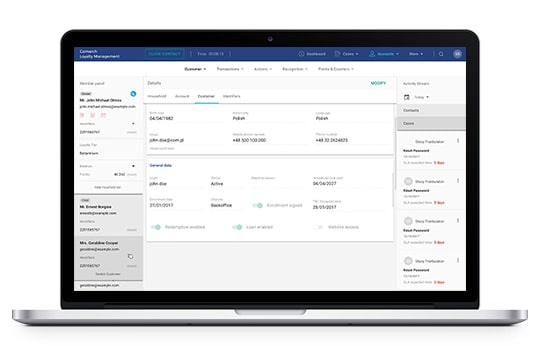
Learn more about your key benefits
Engagement metrics
Football match ticket sales, game attendance, online shop purchases, loyalty program activities.
Performance analytics
Number of app downloads, preferred registration method, user account success rate, engagement geography map, list of groups created by fans on the platform.
The mobile app engages fans to participate in plenty of loyalty programs and activities throughout the season and gathers behavioral data for further use.
Deep engagement
The app allows fans to purchase e-tickets, browse the full catalog of merchandise, and create communities and share photos or videos with their peer group.
Users are rewarded for their activity with tokenized loyalty points. These tokens can be used to purchase merchandise and tickets, take part in invitational events, or place stakes.
Effective advertisement
As fans fill out their profiles and participate in various activities, the platform seamlessly gathers data on their behavior and preferences. The collected user data is shared with advertisers and retailers, allowing for more effective advertising and sales.
Major functionalities of Sparrow Loyalty Management for Sport Clubs & Fans
- Gamification
- Tokens and reward points
- Project features that we do
Gamification
Use of gamification techniques and encourages fans to take part in various challenges. Some of the actions that earn users rewards on the platform are:
- Completed quests and quizzes
- Stakes on half-time or full-time scores
- Reading articles and match reports
- Inviting friends to join the platform
- Watching live streams
- Club merchandise purchases
Tokens and reward points
are accumulated and determine the fan’s profile level. When a new level is gained, the user gets an account upgrade which unlocks new challenge sets and also brings more rewards such as:
- Discounts for game tickets and merchandise
- Signed posters, cups, t-shirts
- Free snacks and beverages
- VIP lounge entrance and season passes.
Project features that we do
- Gamified engagement strategies and loyalty program
- Stakes on games and payments for fan merchandise
- Flexible API to integrate with third-party service providers
- Streaming football games via mobile applications
- Real-time fan behavior and attendance analytics
- Loyalty system management via the admin dashboard
- Badges and achievements for fans
- More detailed fan activity analytics
- Custom peer-to-peer challenges
- Gamification
- Tokens and reward points
- Project features that we do
Gamification
Use of gamification techniques and encourages fans to take part in various challenges. Some of the actions that earn users rewards on the platform are:
- Completed quests and quizzes
- Stakes on half-time or full-time scores
- Reading articles and match reports
- Inviting friends to join the platform
- Watching live streams
- Club merchandise purchases
Tokens and reward points
are accumulated and determine the fan’s profile level. When a new level is gained, the user gets an account upgrade which unlocks new challenge sets and also brings more rewards such as:
- Discounts for game tickets and merchandise
- Signed posters, cups, t-shirts
- Free snacks and beverages
- VIP lounge entrance and season passes.
Project features that we do
- Gamified engagement strategies and loyalty program
- Stakes on games and payments for fan merchandise
- Flexible API to integrate with third-party service providers
- Streaming football games via mobile applications
- Real-time fan behavior and attendance analytics
- Loyalty system management via the admin dashboard
- Badges and achievements for fans
- More detailed fan activity analytics
- Custom peer-to-peer challenges
See how loyalty works
Our Clients


Related products:
Gamification
Diagnostic Point
Cybersecurity in Loyalty
Frequently Asked Questions
Sparrow Loyalty Management provides the capability for passengers to accrue points from airline service transactions, including:
- Flights
- Ancillary Services (SSRs)
Accrual rules for flights can be set up based on the following flight data provided with a transaction:
- Distance
- Fare
- Cabin class
- Booking class
- Other flight data provided with the transaction. Examples include departure airport, destination airport, booking date, departure date, booking channel, etc.
Sparrow Loyalty Management also supports points accrual for transactions with hotels, car rental services, retailers, gas stations, etc.
SLM supports the following processes required for the FFP integration between the main airline (usually the loyalty program owner) and other airline partners:
- Accrual OUT – Sparrow Loyalty Management generates an accrual feed for other airlines, which receives information from the main airline’s data about flight activities connected with a loyalty number. SLM is also able to process the handback file from an other airline, and store information about whether accrual was accepted or rejected by the other airline.
- Accrual IN – SLM processes transactions provided by other airlines, allocates points to customers and generates the handback file together with information about each accrual transaction and whether it was accepted or rejected.
- Retro OUT – SLM exports retro claims submitted by the main airline’s customers for flights taken an other airline, and processes the response file provided by the other airline, which contains information about whether each retro claim was accepted or rejected and the reason for any rejection.
- Retro IN – SLM processes retro claims files submitted by an other airline’s customers for flights taken with the main airline, and generates a response file which is exported to the other airline and contains information about whether each retro claim was accepted or rejected, and the reason for any rejection. Verification is based on the main airline’s flight data source and configured conditions (such a permitted back-dating period).
- Billing OUT – SLM generates billing files which contain information taken from the accrual transactions for the other airline’s flights, supplemented by billing-specific information such as the monetary value of the points.
- Billing IN – SLM processes an other airline’s files, which contain airline transactions for the main airline’s flights for which points were accrued together with the amount of money the main airline should pay. SLM generates the billing response file with information for each billing record about whether or it was accepted, and the reason for any rejection.
Sparrow Loyalty Management supports the following types of airline rewards allowing customers to redeem points either for themselves or someone else:
- Airline ticket
- Cabin class upgrade
- SSR (special service request)
SLM supports three methods of calculating airline reward price in points:
- Dynamic – based on ticket price
- Region – based on departure and destination airport locations, for example from Europe to North America
- Distance – based on the distance between the departure and destination airports
Reward pricing is also differentiated on the basis of cabin class, flight booking class, and the following pricing modes:
- Itinerary – one reward is applied for the whole itinerary. The reward is selected according to cabin class and by the reward partner (usually the marketing airline)
- Route – one reward is applied per route, meaning the departure (outbound) or returning (inbound) segments. For a round trip (RT), two rewards are applied – one for outbound segment, and a second for the inbound segment. Each reward is selected according to cabin class and by the rewards partner (usually the marketing airline)
- Segment – one reward is applied per segment. Each reward is selected according to cabin class and by the reward partner (usually the marketing airline). Each segment can have a different cabin class and different reward partner (the marketing airline).
Customers are also able to redeem points or points and money (fixed or dynamic value), for themselves or someone else, for:
- Hotel room stay reward
- Car rental reward
SLM handles any missing airline accrual transaction by allowing a customer to request a retro claim. It is possible to configure the period in which such a request may be back-dated in relation to the flight departure date, by defining:
- Minimum number of days (e.g. 14) that must have passed since the departure date before a retro claim may be requested
- Maximum number of days (e.g. 180) after the departure date, by which a retro claim must be requested
SLM is able to accept and store airline accrual transactions (for flights and SSRs) without the loyalty number. Such transactions are used for the automatic retro verification process.
If an airline is unable to provide non-member transactions for any reason, the SLM can export retro requests in as a batch file and import a response batch file.
Online integration with a flight data source is also possible, but it is subject to implementation integration within a specific project.
If the automatic retro verification process is unsuccessful for a configured number of retro processing cycles (e.g. three), the retro claim needs to be handled manually by contact center agents who can either accept or reject it (providing an appropriate reason for any rejection).
Comarch Loyalty Management can verify whether the loyalty customer’s name matches the passenger name provided in the process of an airline accrual transaction. The following algorithms are available as alternate matching methods, and can be chosen during partnership configuration with an airline partner:
- Basic name matching
- Standard name combination
- Custom name similarity
- Extended name combination
- Jaro-Winkler
- Title cutting
To solve the problem of non-Roman characters in customers’ names, Comarch has developed a transliteration process in CLM. This process converts non-standard characters into ANSI, which means that the algorithm specified for the most commonly used languages converts every single non-standard character into its ANSI counterpart.
SLM allows the following types of elite tier benefits to be configured:
- Bonus points collected with accrual transactions
- Longer or no expiration period for points
- Redemption discounts
Additionally, there is an option to define a list of benefits for a given elite tier, which customers in this segment can choose. They include, for example:
- Free seat reservation
- Free baggage
- Free fast track
Some of the benefits can be configured to be auto-activated for a given elite tier, and will therefore be applied to all customers in that segment. Others can be configured as selectable, allowing customers to choose benefits when they enter the elite tier, or pre-select those that they would like when they pass the segment threshold.
Elite tier benefits can be selected from among the rewards (for example, vouchers or goods) in the rewards catalogue configured in the SLM. Additionally, elite customers may select as a benefit the option to nominate others to the tier. This includes those who are not members of the program, who will be granted elite tier status upon enrolment).
Sparrow Loyalty Management allows credit cards issued to loyalty program customers to be linked with their loyalty accounts. The linking process assigns a credit card identifier (not the actual credit card number) to the customer’s account. This means that transactions carried out via a credit card partner can be processed without the customer’s main loyalty identifier. Information about credit cards linked to a customer’s loyalty account can be used during processing of transactions or other events, which makes it possible to award some benefits (such as bonus points) just to those customers.
SLM is designed to be fully compatible with Sparrow Infraspace Cloud as well as all other major public cloud providers like AWS, Microsoft Azure, Google Cloud, and take advantage of all its key selling points:
- Reliability
- Scalability
- Flexibility
SLM is a database agnostic system. Depending on the requirements it can be setup with:
- Oracle database – enterprise standard for relational DB
- Can be hosted in public clouds
- PostgreSQL – preferred open source relational database in modern day
- Can be hosted in public clouds
- Amazon RDS / Aurora
- Google Cloud SQL
- Microsoft Azure Database
